

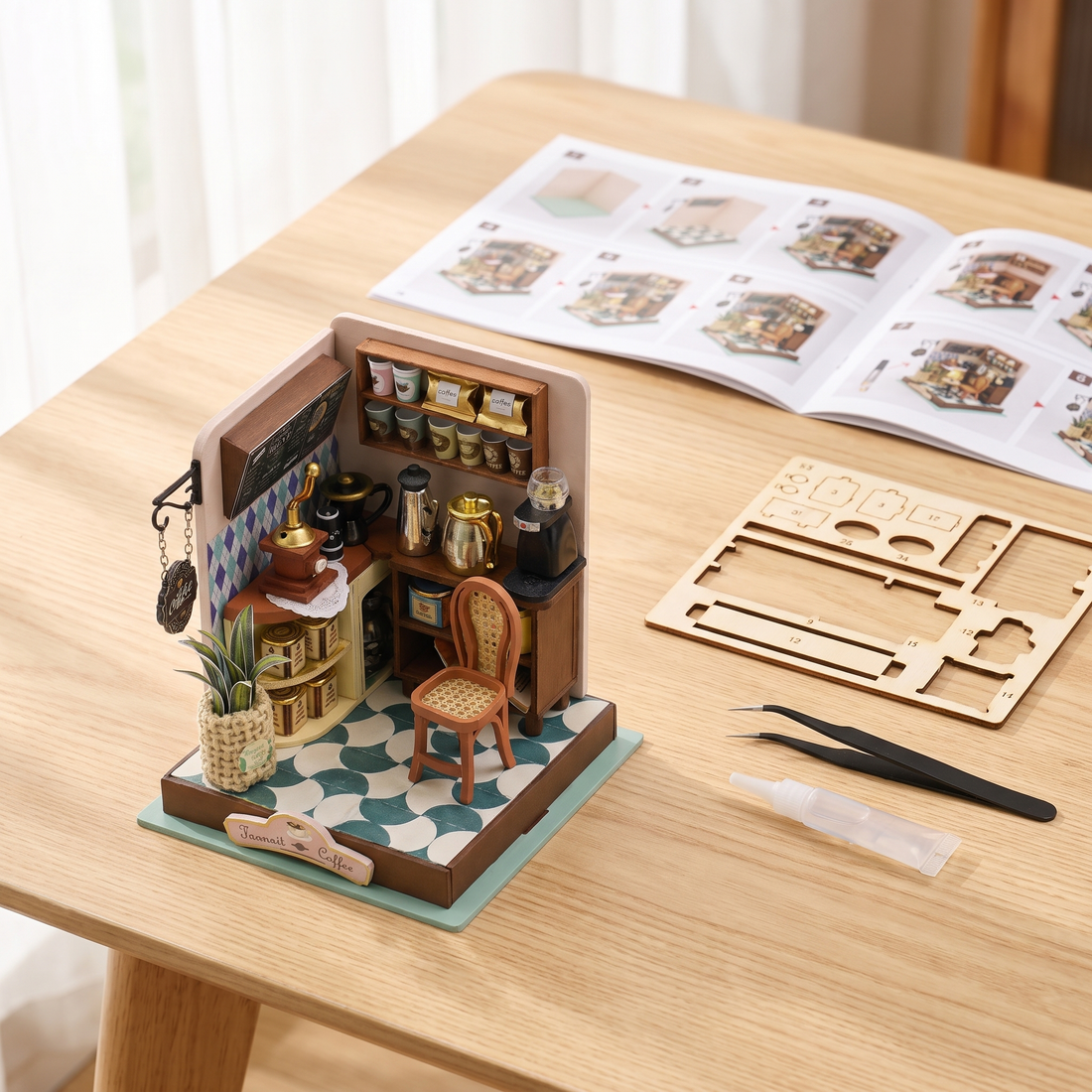
Are DIY Miniature Kits Hard? An Honest Beginner's Guide
If you have never built one, a miniature house kit can look intimidating. Hundreds of tiny pieces, little lamps that actually light up, furniture smaller than your thumbnail. It is fair to wonder whether you need steady hands, an art degree, or a free weekend you do not have.
Here is the honest answer.
The short version: no, not if you pick the right first kit
Most DIY miniature kits are not hard. They are detailed, which is a different thing. Detail takes patience, but it does not take skill you have to learn in advance. Every piece in a TinyCraft kit is pre-cut and numbered, the instructions show you each step with photos, and you work one small section at a time: a wall, a window, a working lamp. You are matching and placing, not measuring and cutting.
What trips up beginners is almost never the building. It is picking a first kit that is too big, then trying to finish it in one sitting. Choose a smaller starter build and give yourself a few quiet evenings, and the whole thing becomes the relaxing part of your week instead of a chore.
What actually makes a kit feel "hard"
Four things decide how challenging a kit really is. Check these before you buy, on any brand:
- Piece count. A 90-piece build is a few evenings. A 300-piece build is a small project. Neither is harder per piece, but more pieces means more time.
- Small parts. The fiddliest moments are tiny items like cups, books, and flowers. Tweezers help. Patience helps more.
- Electronics. Many kits include LED lights. In a good kit this is just connecting a pre-wired battery pack, not soldering.
- Instructions. This is the real difference between an easy kit and a frustrating one. Clear, photo-led, numbered steps make a 260-piece build feel calm. Bad instructions make a 100-piece build feel like a fight.
How TinyCraft kits are set up for first-timers
Every TinyCraft kit is designed so that "no experience needed" is true, not a slogan:
- Numbered, pre-cut pieces. Nothing to trim or guess. You match the number and place it.
- Photo instructions. Each step is shown, not just described.
- Glue and the basic tools are in the box. You do not need to shop for supplies before you start. (Yes, the glue is included.)
- Difficulty is labelled. Each product page lists Difficulty, piece count, and a build-time range, so you know what you are signing up for before you buy.
- Free replacement parts. If a tiny piece goes missing under the couch, you are not stuck. That single fear stops a lot of people, so it is worth knowing it is covered.
How long will your first kit take?
Plan for a few evenings, not one. As a rough guide:
| Kit size | Typical build time | Good for |
|---|---|---|
| Small (around 90 to 150 pieces) | 5 to 10 hours | Your first build |
| Medium (around 150 to 250 pieces) | 8 to 14 hours | Once you have done one |
| Large (250+ pieces) | 12+ hours | When you want a project |
The build time is the point, not the obstacle. Most people describe it as the calmest part of their day.
A good first kit to start with
For an easy, satisfying first build, start small and beginner-rated. The Daily Grind is a friendly entry point: a little coffee shop with around 95 pieces, labelled Beginner. If you love books more than coffee, a book nook like The Corner Bookstore slots straight onto a shelf between real books when it is done, which makes it feel like an instant win.
Prefer something even gentler with no glue at all? A mini crochet kit is about the lowest-pressure way into handmade, and you end up with a little animal you can keep on your desk.
You can see every beginner-friendly option, with difficulty and time listed on each, in Best Sellers.
What you need, and what you don't
You need: a clear table, decent light, an hour to yourself, and a little patience. A pair of tweezers is a nice extra for the tiny parts, but not required.
You do not need: experience, special tools, or supplies bought separately. The glue, the basic tools, and the lights (where a kit includes them) are already in the box.
Frequently asked questions
Are DIY miniature kits hard for complete beginners?
No. If you choose a beginner-rated kit and build it over a few evenings, the only real requirement is patience. Pieces are pre-cut and numbered, and the instructions are photo-led.
Do I need glue or tools?
No. TinyCraft kits include the glue and the basic tools you need, so you can start the moment the box arrives.
Are miniature kits good for adults?
Yes. They are mainly built by adults, as a screen-free way to unwind. The focus it takes is the appeal: a couple of quiet hours where the only thing on your mind is the next small piece.
What happens if a piece is missing or breaks?
TinyCraft sends free replacement parts, so a lost or damaged piece does not end the project.
Can kids build them?
Older kids can, with a hand on the fiddly parts. Most kits list a recommended age (often 10 and up) on the product page.
Ready to start your first one? Browse beginner-friendly kits in Best Sellers, or see the whole range in Shop All. Everything you need is in the box, and no experience is required.
Keep reading
All posts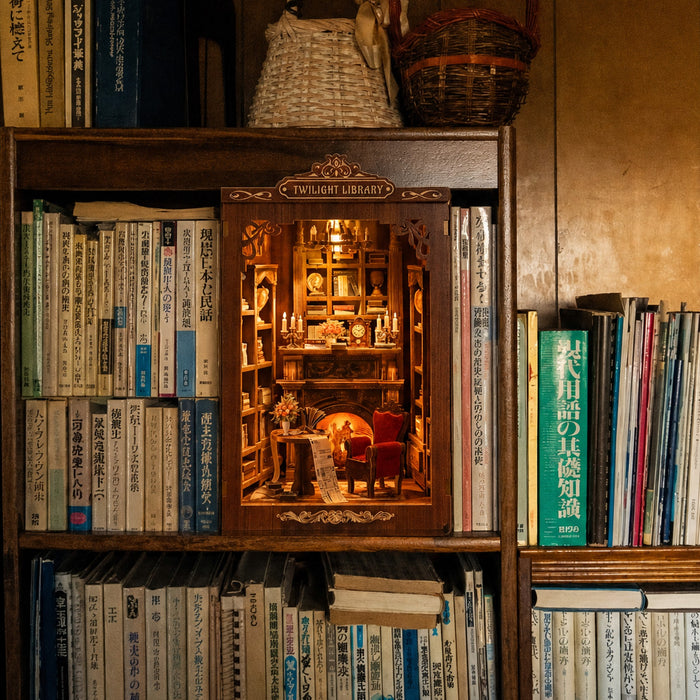
Best Book Nook Kits: 10 Kits Ranked by Difficulty (2026)
Ten book nook kits ranked from easiest to hardest, with real piece counts, hours, assembled sizes and prices, plus an honest comparison...
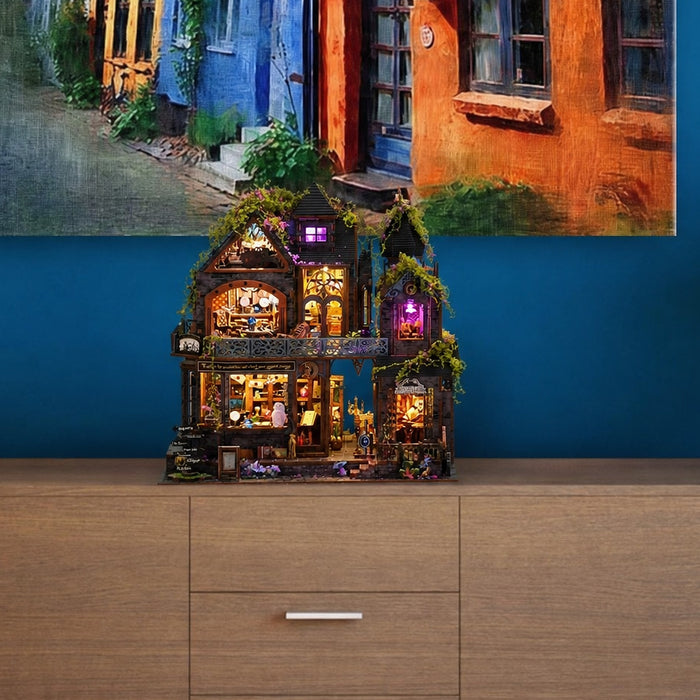
Halloween Book Nook Kits: 9 Spooky Builds for October
The best Halloween book nook and haunted house kits for 2026, ranked by build time, with real piece counts, which ones light...
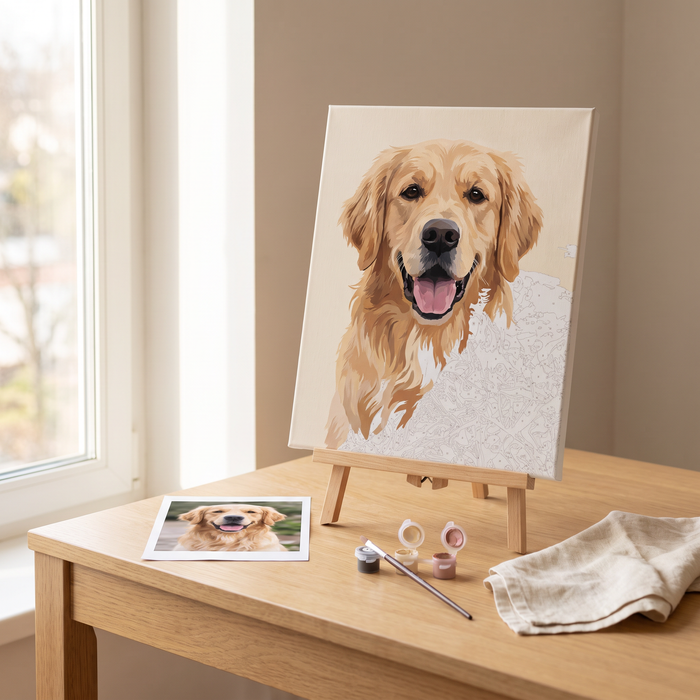
Custom Paint by Numbers: Turn a Photo into Wall Art
Turn a favourite photo into a paint by numbers canvas you paint yourself. How it works, how to pick the right photo,...